Research on microplastics is still getting off the ground, but Dr. Shannon Gowans is sure about one thing.
“What we do know is that they’re not natural, and they shouldn’t be [in our bodies],” she told Creative Loafing Tampa Bay.
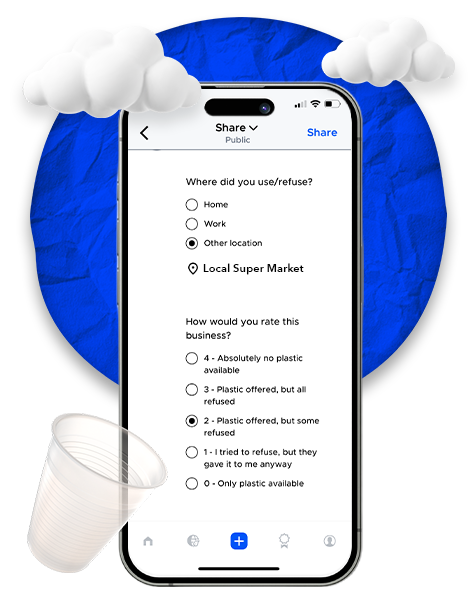
In 2023, Gowans and fellow Eckerd College professor Dr. Amy Siuda launched the Remora app, encouraging users to monitor their single-use plastic consumption, track their progress in refusing plastics, and connect with friends.
On Thursday, the professors of marine science, host a town hall-style meeting to discuss microplastics in Tampa Bay and how we can reduce them.

Microplastic in Tampa Bay, What We Know + How You Can Help
Time Thu., Jan. 29, 7:30 p.m. 2026
Location Sans Market, 1037 Central Ave., St. Petersburg
Microplastics are tiny pieces of plastic under five millimeters in size. They can be manufactured small, like glitter or microbeads, but more frequently, they’re broken down from larger plastic items, such as water bottles, shopping bags, fishing nets, or clothing.
That larger debris ends up in waterways like Tampa Bay where sunlight, heat, waves, and oxygen erode it into smaller pieces.
Microplastics are ingested by organisms including plankton, fish, turtles and manatees. They accumulate in the animals’ digestive systems, making them feel full, which can lead to starvation and leave animals to die with a gut full of plastic.
As microplastics work their way up the food chain, they end up in seafood and being eaten by humans. The precise impact of microplastics on human health is unknown.
“We can’t do a controlled experiment where we feed somebody a whole bunch of microplastics and see what happens,” Gowans told CL. Practical and ethical constraints, as well as the emerging status of the studies, make it difficult to document.
Microplastics also act as a sponge, or magnet, for persistent chemicals like DDT, an insecticide popular in the 1970s that became notorious for its harmful environmental effects. One of its most significant impacts was causing the thinning of eggshells in bald eagles and other birds, leading to substantial population declines.
Although now banned in the United States, DDT still lingers in the environment and can be dangerous when it is concentrated in microplastics. When humans and other organisms ingest these DDT-infused microplastics, it leaches out into their bodies and causes harm.
Gowans and Siuda said that right now, the best way to reduce microplastics in the bay is to stop them at their source: by reducing single-use plastics.
“Trying to remove them and not have them out there is a far better scenario than debating exactly how harmful they are,” Gowans said.
Remora, the app that helps users track how often they use single-use plastics
While many grocery stores promote reusable bags, other retailers such as clothing stores and malls lag behind. Gowans and Siuda’s Remora app aims to encourage more businesses to adopt sustainable practices and support policy changes. A new update allows users to rate businesses on their plastic use practices, which in hopes that it will benefit businesses limiting plastics.
With the data collected from Remora, Gowans and Siuda monitor plastic use, identify trends, help support policy changes, and encourage businesses to use better practices.
“The more data we have, the more powerful it becomes,” Gowans said.
Monitoring of microplastics is not federally regulated, which makes it difficult to estimate how many are in our waterways on a national level, and how different areas compare to one another. Measurements that have been made are the result of localized scientific studies.
“Now, we’re pretty sure our Tampa Bay is the longest running estuary microplastics monitoring project in the country,” Siuda said.
Gowans and Siuda envision the Remora project as a way to establish a baseline in tracking change and to serve as a model for other waterways and research efforts.
The duo told CL that in Tampa Bay, it is estimated that there is approximately one plastic particle per liter of water. That’s two pieces of plastic for the amount of liquid in a two-liter Coca-Cola bottle.
If we were to filter all of the water in Tampa Bay to remove microplastics, Gowans and Siuda said, we would kill pretty much everything in Tampa Bay, because we’d also be removing all the plankton and microorganisms that are the foundation of the ecosystem.
There is a better solution, though.
“If we’re generating less, there’s less chance it ever gets out into the environment,” Gowans said.

Credit: Remora app
Pitch in to help make the Tampa Bay Journalism Project a success.
Subscribe to Creative Loafing newsletters.
Follow us: Google News | NewsBreak | Reddit | Instagram | Facebook | BlueSky
This article appears in Jan. 22 – 28, 2026.