
The saying that the journey is more important than the destination certainly holds true in the case of The Way. In this delightful, modest road movie of sorts, Martin Sheen leads a small, gifted ensemble cast as Tom Avery, a California ophthalmologist who is informed his son Daniel (real-life son Emilio Estevez) died while attempting to walk El Camino de Santiago de Compostela, a 500-mile Christian pilgrimage route that stretches from southern France to northwest Spain.
While in France to identify Daniel and bring him home, Tom makes the impulsive decision to honor his son’s memory by finishing his journey. During the course of his trek, Tom is eventually joined by three other backpackers. The first of these is Joost (Yorick van Wageningen), a gregarious, colorful Dutchman who says he’s out to lose a few pounds. Without crossing the line into cliché and caricature, his outgoing nature contrasts in comedic fashion with Tom’s surliness. Later, Tom comes across Sarah (Deborah Kara Unger), an acid-tongued Canadian who unloads piles of bitterness while chain-smoking the cigarettes she insists she’ll give up at the end of her journey.
The last to join and form this walking quartet is Jack (James Nesbitt), a travel writer from Ireland who is given to flights of florid spoken verse as he tries to find the hidden meaning in the mundane. Over the course of the group’s walk, we learn that each of the characters is traveling for reasons other than those they’ve initially shared. Their motivations help to counterbalance the nature of Tom’s mission and add to the richness of our time in their company.
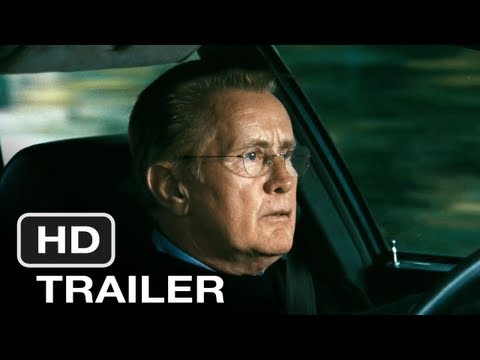
As a grieving father, Sheen delivers a smart, restrained performance, one very much befitting a man who is working his way through pain by “doing.” His character is imperfect and opaque, occasionally holding the faraway look of someone who isn’t quite as sure of himself anymore.
Estevez does an admirable job directing this film of small, flowering moments. Though it might have benefited from some judicious editing, The Way is a satisfying experience because it expresses the human condition without devolving into excessive sentimentality or exploitation. Estevez is content to capture a gesture, a landscape, an interesting look, thus preserving the mystery and romance of travel, while respecting those whose interior lives remain unknown.
The Way meanders, but its treatment of life as an unfolding story, one that is created with each step, resonates. Estevez offers a lot to think about, including what it means to live a life and to be a pilgrim in our modern age. By the end of the group’s long walk, no one has arrived at a great epiphany, but they each seem to have undergone an emotional and spiritual cleansing.
Though it relies heavily on the use of soundtrack music, The Way distinguishes itself because it avoids the too-precious indie film template of trying to be quirky, ironic and self-conscious. Estevez doesn’t fetishize his subjects or their struggles. In its final shot, The Way illustrates one of Daniel’s statements to his father during flashback: “You don’t choose a life. You live one.” As it leaves plenty of room for interpretation and introspection, The Way will likely reward repeated viewings.
This article appears in Oct 20-26, 2011.
