


This year may have put a stop to some people’s plans, but it ignited a somewhat old idea that local hip-hop legend Mike Mass and roots songwriter J.T. Brown had in their pocket. That idea came to life in the form of a powerhouse single and video—“Blood In the Water”—which came with a documentary, to boot.
Mass’s powerfully emotional lyrics regarding current issues—“The pressure seems unreal, I need consent to breathe. They’ll whip every slave in the county if I attempt to leave”—combined with Brown’s pleading chorus makes this the song of 2020, local or not. Creative Loafing Tampa Bay talked with the two musicians, on separate occasions, about the making of the song, the video and trying to get the message right.
“I sent the hook to him that years ago, something like that… when Charlottesville went down,” Brown, 36, said.
Brown is referring to 2017’s “Unite the Right” rally where right-wing protesters—including white supremacists waving Nazi flags—gathered for a week in Virginia. During that rally, pro-Black counterprotester Heather Heyer was killed when James Alex Fields Jr. drove his Dodge Challenger through a crowd. The New York Times reported that a photographer said he saw Fields on with symbols of Vanguard America, a group whose manifesto declares that “a government based in the natural law must not cater to the false notion of equality.” The organization denied any ties to Mr. Fields.
“…It was before all the protests and everything, and the big unified revolution,” Mass, 31, added, “It was kind of our idea, to say we don’t need to have something going on to bring light to what’s going on.”
But then, of course, a lot more bullshit happened. So, after George Floyd got murdered, he and Brown got to work.
“Things started to get more and more serious and we got more and more serious about doing it,” Mass said. Brown had the hook down, but knew he couldn’t pull off the seriousness of the song by himself.
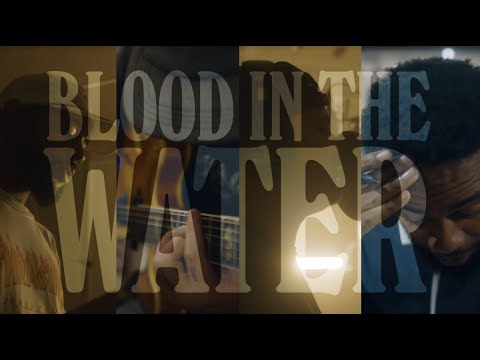
“I needed Mike to come in and do the heavy lifting as far as the message goes, ‘cause I’m white,” Brown said.. So he booked studio time at South Tampa’s La La Mansion and Mass came up with the lyrics while they were there. “He [Mass] came in and that day, while Denny [Augusto] and I were recording the drums and guitar, basically setting the structure of the song. He was just in the corner chilling and then he got up and did his verses… It was mind blowing.”
Brown had an idea of what concept he wanted: the first verse he wanted to be from the perspective of a slave, the second verse from slave reincarnated into a civil rights leader, and the last from the viewpoint of a 10-year-old boy living now. Mass took those ideas, and flew with them: “An escape is what I need, a little drink, a little reefer, but I get stopped and get arrested, I’m thrown in prison for chiefin’ it’s wild. It may be that the same reason they sent me here gon’ make white folks millionaires in like 50 years.”
“There’s so much depth and so many layers to every line he came up with,” Brown said, “I don’t want to throw the word genius around but I just don’t know how else to describe that level of output in the moment like that.”
Brown, who grew up in Tampa, also got investors to help, which led to polish and no-expense-spared feel of the recording, video and documentary.
“The capital would’ve been way out of our reach,” Brown said about the folks who helped him and Mass bring “Blood In the Water” to life on tape and onscreen.
“It ended up being something everybody wanted to be a part of even in the smallest way; they kinda make a difference in what’s going on,” Mass said.
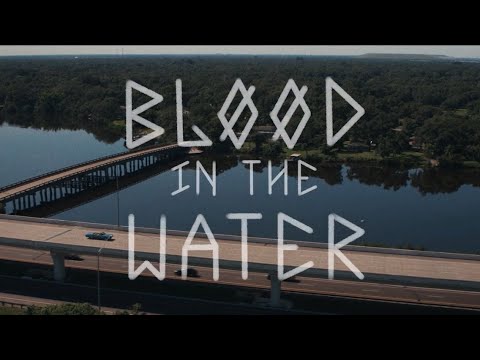
The single’s stunning production has a video to match thanks to local filmmaker Jordan Hicks, Forepeak Films, and Lot 1901 film studio. Hicks was a director of photography, or cinematographer, on two of Brown’s videos; Brown said Hicks had to pull some connections to shut down the top deck of Tampa’s Lee Roy Selmon Crosstown Expressway for hours during filming.
We had to submit the song with the lyrics and everything to the City of Tampa. We had to get a police escort for that which is interesting because of the content,” Mass explained, adding that the cops even let them go over time.
“I was a little nervous about working on a set with police containing this type of subject matter. I’m happy to say they cleared us to film and were very cooperative, which was encouraging considering the song and it’s message,” Mass added.
Hicks, for his part, told CL he also worked with Film Tampa Bay to make the shoot possible, adding that his role and vision was to simply “provide space in the visual for two gentlemen to have a conversation about the current state of affairs in our world today.”
In his email to CL, Hicks clarified that it was the Tampa Hillsborough Expressway Authority, not the City of Tampa, that approved the lyrics.
“By law you have to have law enforcement present for any production of this size,” Hicks wrote, adding that his team at Forepeak handled the expressway shutdown. “We actually personally know the officer involved and he did us a serious favor by staying later then discussed and working for us the whole time to maximize our time on the expressway.”

The picturesque video is of the two musicians in a vintage GTO convertible, which they had to drive back and forth from Tampa to Brandon for hours. And the serenity of the five-and-a-half-minute clip is ironic because of the harsh realities of what the lyrics say, but also because those images are matched up in a correlated documentary—made by Dylan Melcher and George Goldberg—that was released on Thanksgiving.
“(The documentary) highlights the making of the song… but it’s also a commentary on social injustice and police brutality,” Brown said. He wanted to make sure the whole project was not through the white viewpoints of himself, his co-producers or his investors. They used production time to talk with Mass and Goldberg, other people of color on set, about their personal experiences.
“The biggest thing for all of us is just diving into it and understanding, learning and educating ourselves on what it is like—the Black experience everyday in America,” Brown said. “Hearing stories and stuff, to us that sound crazy, but for them that’s their day-to-day. It was very eye opening.”
Separately, Mass and Brown are deep into their own projects—Mass is a year into his new label and brand Wave Theory through which he hosts an open mic Tuesday nights at Tampa Height’s Shuffle. Brown is still trying to play out as much as he can, and has some singles that will be out in 2021. Mass is also working on a new album, but is taking a step back on the production side—he’s also working with producer Kelz with the Heat who he met through Joyner Lucas, a Grammy-nominated rapper with Tampa connects who just blew up with his own song, “Will.”
For now, they are both just hoping “Blood In the Water” gets out there.
“We are working on a minimal marketing budget so we’re kind of working on the power of the message to slowly do its thing,” Brown said.
And that message exactly? United change, in a nutshell. And everyone on board to help stop the killing and oppression of Black people in America.
“I wanted to try and give an artistic representation of the idea,” Brown said, “that it’s going to take everyone speaking up to make a systemic change.”
UPDATED 12/10/20 3:45 p.m. Updated with additional comment from filmmaker Jordan Hicks and Mike Mass.
Support local journalism in these crazy days. Our small but mighty team is working tirelessly to bring you up to the minute news on how Coronavirus is affecting Tampa and surrounding areas. Please consider making a one time or monthly donation to help support our staff. Every little bit helps.
Subscribe to our newsletter and follow @cl_tampabay on Twitter.

This article appears in Dec 10-16, 2020.
