

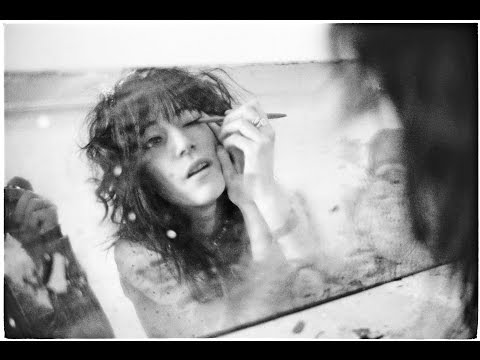
Today in rock history: on this date in 1975, one of the boldest and most artistic statements by a female musical artist of any genre or time period saw the light of day when Patti Smith’s enormously important debut album Horses was released. A poet and artist who was as influenced by the work of rock legends Bob Dylan and Jim Morrison as she was by French poet Rimbaud, Smith is credited with helping usher in the New York punk rock movement in the mid-1970s and, more significantly, with establishing and signaling a new era of music where women were every bit as vital and essential to the art form as the men who’d long dominated the field. A striking, stark, black and white cover shot of the Patti on the jacket of this astounding album was enough to intrigue curious listeners; an androgynous photo (snapped by longtime friend and famed photographer Robert Mapplethorpe) of Patti clad in a man’s shirt and a jacket slung over her shoulder matched the complexity of the enthralling vinyl platter that was housed inside. This album, which had a profound effect on artists like Morrissey, R.E.M.’s Michael Stipe and Simon LeBon of Duran Duran, sounded and felt like nothing anyone had ever heard until this point. Smith’s poetic odes and her mixture of aggressive, impassioned vocals and solemn spoken passages along with the assistance of her electrified backing band painted a canvas that revolutionized rock and roll and opened doors for so many artists and performers to follow. Produced by former Velvet Underground member John Cale, the record contained classic and enduring selections like “Birdland,” “Redondo Beach” and “Gloria.” It is often referred to as one of the greatest debut albums of all time. The significance of this amazing piece of work can’t be understated; while it’s not only a pivotal moment in music history that instilled an air of freedom and creativity for female artists, it’s quite simply an incredibly important and influential piece of work with limitless appeal that singlehandedly turned the tide of the musical landscape in the 1970s and challenged conventions and stereotypes like nothing else before it.
Today in rock history: on this date in 1977, extraordinary Canadian singer and songwriter Joni Mitchell released the most experimental and confounding album of her career to that point, her spellbinding 2-LP set, Don Juan’s Reckless Daughter. Delving into the world of jazz and fusion, Mitchell assembled an impressive collection of musicians to help her carry out this ambitious album that included bassist Jaco Pastorius, guitarist Larry Carlton and singer Chaka Khan among many others. Reviews were mixed; some critics and longtime fans were not sold on Joni’s foray into jazz but, nonetheless, her credibility and her fearlessness were inspiring to (and welcomed by) many. The album’s centerpiece is the grand, 16-minute free form, improvised piece “Paprika Plains” whichtakes up an entire side of this double album. The album served as a brazen reminder that Joni Mitchell was not an artist to be pigeonholed or to remain stuck in one place musically or stylistically. The album still managed to almost crack the Top 20 of Billboard’s pop albums chart and went on to achieve gold status, reaching sales in excess of 500,000 copies sold, just months after its release.

Today in rock history: on this date in 1971, Welsh Beatles protegee band Badfinger released its third album, the power pop masterpiece, Straight Up. The band’s harder rocking earlier sound was toned down a bit and more of a melodic, pop feel graced the grooves of this infectious, joyful record. Featuring the hits “Baby Blue” and “Day After Day,” the album capitalizes on the true beauty of the vocal harmonies and the pop hooks the band was capable of creating. Often referred to as the band’s strongest and most consistent album, the initial reaction to the record was mixed. Co-produced by Todd Rundgren and George Harrison (who also played guitar on the album), the record barely cracked the Top 30 of Billboard’s pop albums chart but its influence on countless power pop bands more than makes up for the undeserved, less than overwhelming success it received on sales charts.
Today in rock history: on this date in 1970, Welsh rocker Dave Edmunds reached the No. 1 spot on the British singles chart with his cover of the 1955 Smiley Lewis rhythm and blues song, “I Hear You Knocking”. While the original recording relied more heavily on boogie-woogie piano work, Edmunds made the track sound more contemporary by instead letting his superb guitar work take over and turn the song into a fresh and inspired rocker. The song went on to top English charts for six weeks and remains Dave’s only hit to reach the No. 1 spot in England. In later years, Edmunds would rise to fame as guitarist and singer along with Nick Lowe in pop/rock band Rockpile, become a worldwide success and would continue on his own path as a well-respected and revered solo artist.

This article appears in Dec 7-14, 2017.
