Chip Campbell regards his oil and gas business deals like a game of polo.
“Anytime I can be on my son’s team and compete in a team sport is rewarding for me! Especially when we can win together,” Campbell said in a Polo magazine. “Just like doing business deals together and succeeding.”
Father and son duo Edward “Chip” Campbell III and Edward “Camp” Campbell IV, well known on the pitch, play for their Clearwater Polo Team in Wellington, Florida. Off the pitch, the duo operates various shell companies that deal in oil and gas. Those companies have advocates in Florida’s state capital.
The Florida Department of Environmental Protection (FDEP) supports granting an oil drilling permit to Clearwater Land & Minerals FLA, a Campbell family company based out of Shreveport, Louisiana.
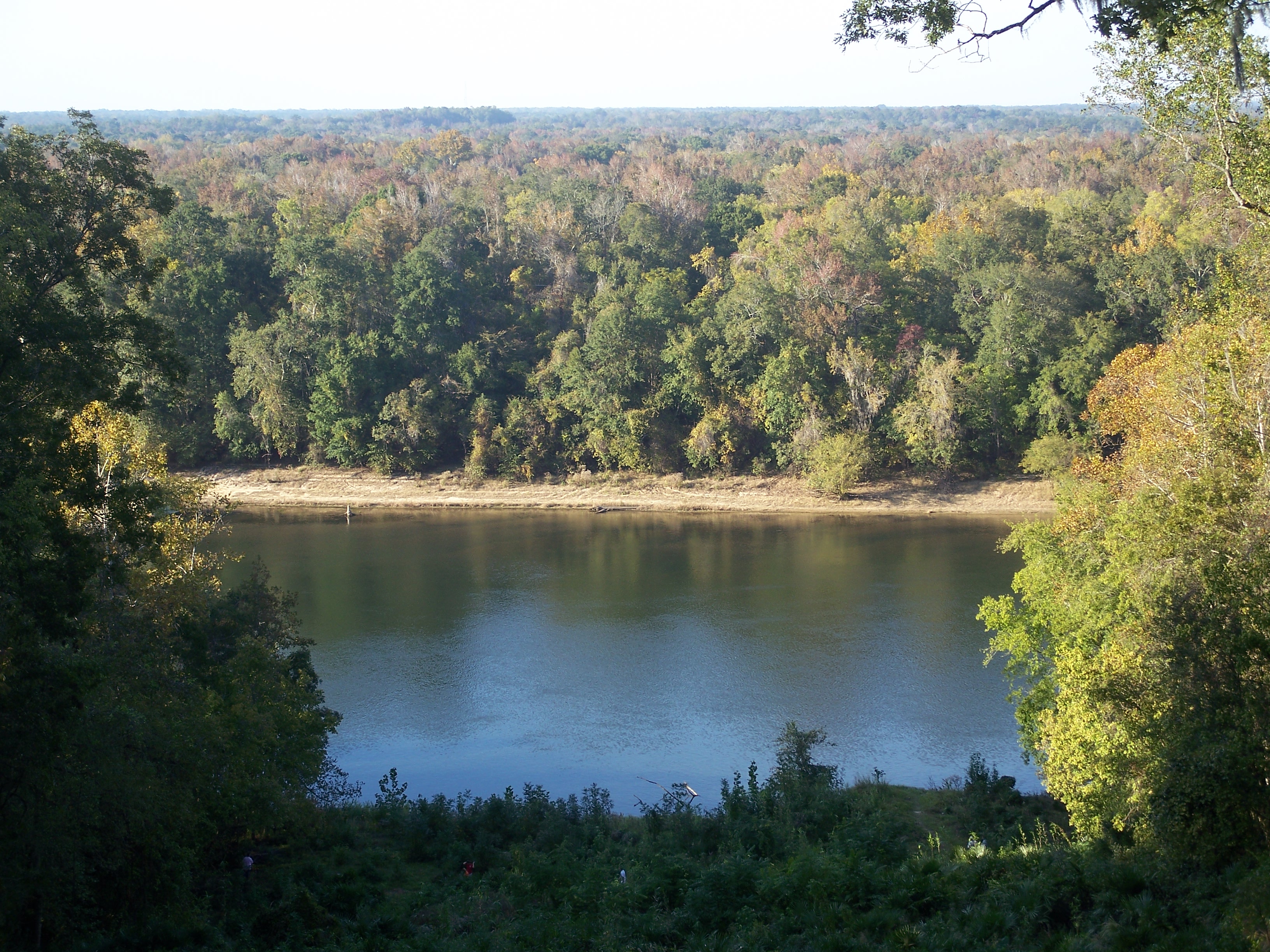
The proposed drilling site is in Calhoun County in the floodplain between the Apalachicola River, Chipola River, and Dead Lakes. Local communities fear the project could create a toxic pit, releasing harmful chemicals, threatening water quality and fisheries in one of Florida’s most biodiverse areas.
Protests broke out on Dec. 9, on the first day of hearings in the legal challenge to the state’s regulatory agency from Apalachicola Riverkeeper, a nonprofit advocacy group.
Echoes of protesters chanting “kill the drill” and “save the bay” resounded from the steps of the FDEP headquarters in Tallahassee. Its glass facade mirrored a crowd of demonstrators, including local advocates and oyster farmers who gathered to demand the governor and state regulators deny the permit.
The permit is currently being considered by an administrative law judge with a decision due this week on Tuesday, Feb. 25.
Demonstrators are worried about the health of the bay, which is intimately tied to the health of the river. Local oyster farmers and fishermen attending the protest expressed their concerns over how they would be impacted by the drilling.
“We stand in firm opposition to the experimental oil drilling in our region,” said Danielle Davidson, of Lady Guide Fly Fishing, speaking from a podium to protesters. “The Apalachicola River ecosystem puts food on our tables, draws visitors seeking authentic experiences, and gives countless species a place to thrive. It’s the heart and soul of our community and our economy. We can’t afford a risk like this.”
Apalachicola Riverkeeper’s legal challenge is part of a statewide strategy by Florida nonprofits to protect and sustain Florida’s aquatic and natural resources. Nonprofit organizations, including Florida Springs Council, have used the courts to push FDEP toward more meaningful regulatory action based on existing Florida laws. Apalachicola Riverkeeper’s lawsuit calls into question how the state’s regulatory agency gauges public interest when Clearwater Oil & Minerals FLA is not actually based in Florida.
After the protests on Dec. 19-20, while most people were spending time with family and turning their attention to the holidays, state regulators said they intended to transfer additional permits to Clearwater.
Gil Damon, director of the nonprofit Downriver Project, called the action “a Christmas present from the Department of Environmental Protection to this oil company.”
“It’s progress toward a much greater, larger, more dangerous drilling project than we previously understood,” Damon said in a phone interview.
North Florida’s Apalachicola River, formed by the meeting of the Chattahoochee and Flint rivers, winds 160 miles from Lake Seminole to the Gulf of Mexico near Apalachicola. The river then flows into the Apalachicola Bay, which extends over 200 square miles.
No company has successfully found commercially viable oil in the Apalachicola River area. Yet, exploratory drilling permits have been issued, including recently to Clearwater Land & Minerals at a site that was previously approved for another company called Cholla Petroleum. Previous efforts by other companies also failed to find oil. Since most wells in the region have historically been dry, success for the Campbells is not guaranteed.
However, Chip and Camp are confident in the riverbed site’s prospects. Camp testified in court that their drill is likely to score a goal in the Apalachicola River Basin. Court documents show that Camp believes the Calhoun County site resembles other sites they have worked on, including sites that are producing commercially viable amounts of oil in Alabama.

Speakers at the protest included Jack Rudloe, founder of Gulf Specimen Marine Lab, who appeared with a large model of a pink colored snapper under his arm. He pointed out that companies have a history of searching for oil in North Florida without finding any.
“We don’t need this in Apalachicola Bay. We don’t need drilling,” Rudloe said to protesters.
Camp graduated with a degree in Petroleum Engineering from Louisiana State University. His sister, Camille Campbell Latham, also graduated from LSU with the same degree. Both Campbells did a brief stint at other oil companies before formally joining the family business.
The Campbells have a significant legacy at LSU and are active donors to the university. They helped open the school’s Shreveport campus. An LSU auditorium is named for Camp’s grandfather, Edward “Bo” Campbell II.
Bo was a college football star at LSU in the 1960s. He turned down several offers to join the National Football League, instead joining Pioneer Bank & Trust, founded by his father. Bo continued at Pioneer Bank until a merger with Hibernia Corporation that would go on to merge with Capital One. Bo was then made a board member at Capital One until his retirement.
Bo then worked with his sons Chip and Chris on several investments. When Bo died in 2021, his memorial service was at the Shreveport Petroleum Club.
Chip and Camp are still carrying on the family tradition of drilling for oil and gas, as well as creating new ones in polo such as competing together in tournaments and breeding horses.

In addition to owning the Clearwater Polo Team and competing, Chip has held several positions in the United States Polo Association, including as Treasurer, President, and Chairman. Chip is now Chairman of USPA Global Licensing, the organization’s business and licensing wing.
The polo organization recently launched an apparel initiative called USPA Life. The initiative’s website features a trio of male models sporting green, black, and white polo shirts, laughing together against a background of palm trees.
A description of the initiative emphasizes making products “in ethical and sustainable ways.” The heading continues, saying USPA is dedicated to “pursuing new eco-processes and green innovations to help reach our goal of protecting our planet for future generations. We understand that in order for our quality products and the game of polo to thrive, we must take a responsible stance as world citizens.”
Statements associated with the initiative called USPA’s Commitment to Protect Forests include sections about reducing greenhouse gas footprints and protecting water.
“U.S. Polo Assn. recognizes the importance of forests as carbon storehouses and their role in maintaining climate stability,” the statement said. “We will encourage our partners to implement strategies that actively maintain and restore forest intactness to maintain forests’ function of regulating the flow and purity of water at a micro and macro scale.”
Chip Campbell’s oil venture next to a vital Florida river does not seem to align with his sporting organization’s stated commitment to environmental protection.
Though Chip was present at the hearing, lawyers took steps to avoid identifying him for the record. Instead, the younger Camp testified on behalf of the family operation.
Lawyers for Clearwater did not respond when asked for comment on issues related to information from the hearing transcripts, including to clarify their comments in court and how their client’s request aligns with Florida’s public interest. After lawyers were contacted, the transcripts were removed from the case docket on the Department of Administrative Hearings website.
As reported by Craig Pittman at the Florida Phoenix, one Calhoun County commissioner noted that as outside investors the Campbells have money to lose. As investors, they also play a limited role in the drilling itself.
“We are not an operator,” Camp said in court. “We do not have the staff and personnel necessary to properly operate a prospect.”
Clearwater plans to contract with another Shreveport-based company called Brammer Engineering to operate the site.

Court documents show that the Campbells expect to offload coverage of potential accidents or spills to Brammer. When a lawyer asked if Clearwater expected “that Brammer would carry insurance with any coverage necessary to cover a loss of control or a spill,” Camp answered “yes.”
At the time of the hearing Clearwater had not set aside any money for spill response. “We do not believe that that is necessary at this time,” Camp said in court.
Though representatives for the applicants discussed safety measures throughout the hearing, advocates for Apalachicola are concerned that such measures aren’t enough and they are concerned about the company’s track record.
Locals in Apalachicola know that oil doesn’t make for clear water. Safety measures famously failed during the 2010 BP oil spill in the Gulf of Mexico, when a blowout at the Deepwater Horizon platform had catastrophic effects on the marine-based economy in Florida.
“Our livelihoods depend on clean water and we know, we all know, that oil and water do not mix. We know that one accident, one spill, one flood event, and it would be devastation for everything down river and into our precious bay,” said Xochitl Bervera, a local oyster farmer, speaking to protesters.
Residents of Apalachicola say they can’t afford another catastrophe.

“It’s a whole lot of additional risk. It’s a big concern. If you’re somebody who fishes in Apalachicola Bay, or who has an oyster farm out there, or who recreates an Apalachicola or who enjoys North Florida seafood, or who enjoys tupelo honey, or who just happens to value this way of life and the thousands of livelihoods that depend on clean water in this area, if you’re any of those people, it’s a concern,” Gil Damon said.
For the polo playing Campbell family, the stakes are different.
“My life now revolves around [Polo]. I don’t know if it has cost me or saved me from doing bad deals as it occupies a lot of time and energy,” Chip said in ClickPolo
He’s concerned for the future of the sport, according to the interview.
“I am not as positive as some on polo in the U.S.—the USPA through its business has the current ability to throw an obscene amount of money into subsidizing this sport every year to make it worthwhile and relevant,” Chip said.
As they await the judge’s decision, Camp is hard at work on the pitch at a recent match in Wellington, Florida. He rode atop a brown horse, clad in an ash colored jersey and spotless chaps, the No. 1 in white on his back.
The ball rolled right between the goal posts.
“A great shot from Camp,” said the announcer.
Subscribe to Creative Loafing newsletters.
Follow us: Google News | NewsBreak | Reddit | Instagram | Facebook | BlueSky
Related Stories

Bill banning oil drilling near Florida’s estuarine research reserves passes unanimously in House

Florida judge recommends against drilling near the Apalachicola River
Florida officials deny permit to drill for oil near the Apalachicola River
This article appears in Feb 20-26, 2025.