


In a normal world, Charley Crockett sells albums on the road, five nights a week, as part of a plan hatched by his agent, renowned roots and rock scene vet Jon Folk. Nightclubs are impossible these days, but circumstances haven’t slowed Crockett, 36, down one bit. So he’s selling the 13-track LP—Welcome to Hard Times, due July 31 via Thirty Tigers and Crockett’s own Son of Davy imprint—on the phone.
When Creative Loafing Tampa Bay caught him, Crockett was cruising around Austin, Texas in a ‘95 F-250 outfitted with a ‘69 square top. The songwriter let himself live a little the night before, so was looking for a healthy lunch. Taking care of his body is paramount these days as it’s been less than two years since Crockett had open heart surgery to repair a rare condition (Wolff-Parkinson’s-White) that he’d been living with since the day he was born to a single mom in rural south Texas’ Rio Grande Valley. Surgeons preparing to fix the condition, plus a seven-year-old hernia, found blood severely leaking into Crockett’s heart because of a missing aorta. Crockett thought his dizziness, shortness of breath and blackouts came from his rigorous touring schedule; the doctors saved his life. Crockett now sports a scar from just below his neck to the middle of his chest. In a January 2019 post-op message thanking fans, Crockett wrote, “This charging bull got himself a new transmission good for a million more miles… I’ve been turning my curse into a blessing since 1984 and y’all can always count on me to come over that next mountain top.”
Welcome to Hard Times—produced by Mark Neill and featuring songwriting from the Black Keys’ Dan Auerbach—was written well before coronavirus landed on the public’s radar, and many of the labels who wanted to release the album suggested Crockett push the release date back to next spring. Something told him that was a bad idea. Folk agreed, and told the artist to push the record up.
“I said, ‘Man to be honest with you, that’s what I was feeling in my heart of hearts, but I was afraid to say anything because I felt like everybody was wanting to play it safe,’” Crockett told CL about his reaction to Folk’s suggestion. Crockett—a twice-convicted felon implicated in his brother’s crimes—views himself as an underdog and was worried that his album would get lost in the static when all the louder voices releasing music in 2021. So far, the gamble has paid off. Streaming numbers are higher than they’ve ever been, and feedback on what he considers the best of his five-year-old discography has all been positive.
Filed in the classic country bin at the record store, the record’s makeup simultaneously oozes with honky-tonk, the blues and soul. Crockett eschews labels, especially ones that divide, but Hard Times is also colored with flashes of his pasts as a subway performer who played alongside rappers and the sound of his sprawling ethnic background (European, African, Cajun, Creole and Jewish roots). The songwriter’s time in Louisiana, and the chip on his shoulder, make themselves known, too. And its title track couldn’t have come at a more appropriate time.
On it, Crockett plainly states that life’s a casino where the dice are loaded and everything’s fixed against you (“even a hobo could tell you this,” he sings). The song, and album as a whole, is Crockett’s reaction to life after a surgery that kept him from pushing daisies—and he’s got an important question to ask: “Would you even care if I told you my life just isn’t fair?”
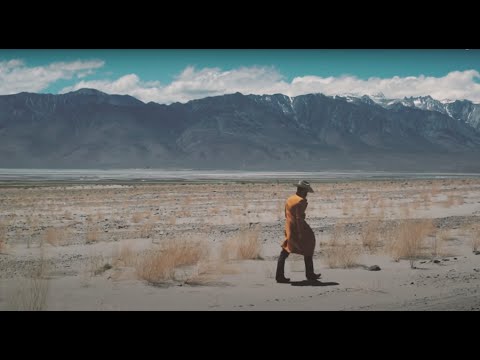
But “Welcome To Hard Times”—in all of its isolation and loneliness—was also released, unintentionally, two days after George Floyd was murdered in Minneapolis. I first heard it on the day after seeing Minneapolis’ third precinct burn down. There was no way to predict Floyd’s murder and the ensuing protests still in the streets more than a month later. To Crockett, the new civil rights movement affirms what he’s observed from the highway over the last decade. What happened to Floyd happens to countless others; it being captured on video forced the country to finally deal with issues the U.S. has been trying to confront since the ‘60s.
“I’ve been circling this country my entire adult life, and it doesn’t make a big difference whether I was thumbin’ on the side of the highway, or riding in a tour bus. It’s real similar to me,” Crockett told CL. “I’m basically hanging out in damn near the same area of the town on the bus that I was on the street. I’m just a little bit higher up off the ground on a bunk.”
The only thing that’s really changed is his audience. On the street, it was more diverse; when you get into bigger clubs with bigger covers, the demographics change, which is OK because Crockett loves playing for anyone who’ll listen.
“I don’t want to be surrounded by people that only think like me, because then I ain’t growing,” he said. He evoked the Roger Miller tune “Where Where Have All the Average People Gone” in trying to explain what it’s like to talk to so many people across the country—all with different views. Crockett said the swath of perspectives has a tremendous effect on an artist. He hears the concerns of blue collar workers and wants them to know that just because George Floyd opened the door for Black Lives Matter doesn’t mean their working class voice is canceled.
“I believe that there’s room,” Crockett explained about both perspectives. “[But] one voice has been heard for a long time and the other one hasn’t.”
And at the end of the day, Crockett’s new album is about his own hard time anyway—he’s just glad that a song about struggle has found its way into people’s own personal battle.
“I think artists want to affect culture. It’s one thing to be some kind of opportunist that runs out there and tries to take advantage of movements and stuff. It’s another thing for your true life experiences to resonate with people and make a difference,” Crockett said. He hopes the album’s message of gambling on yourself despite bad odds resonates, and he’s clear about not standing down from saying what he believes is right and wrong.
“I don’t care whether or not people agree with this or not, but I’m out here on the road my whole life. No offense to most of these people, but they’re not. I’m out here on the road, all the time,” he said. “So for all these people who want to sit here and tell a country singer to shut up and sing—I want to tell them, ‘Why don’t you shut up and listen for a second?’”
And if they wanted to be more like Charley, they’d open their hearts, too.
A full Q&A will be added to this post.
Support local journalism in these crazy days. Our small but mighty team is working tirelessly to bring you up to the minute news on how Coronavirus is affecting Tampa and surrounding areas. Please consider making a one time or monthly donation to help support our staff. Every little bit helps.
Follow @cl_music on Twitter to get the most up-to-date music news, concert announcements and local tunes. Subscribe to our newsletter, and listen to us on WMNF 88.5-FM’s “Radio Reverb” program every Saturday from 4 p.m.-6 p.m.
Related Stories

Road-tested rising country star Charley Crockett will play Tampa Theatre this spring

Dwight Yoakam is bringing fellow country star Charley Crockett to Clearwater this fall
This article appears in Jul 9-15, 2020.
