

As a four-year-old kid in Chicago, Andy Huse would pretend to be a reporter, walking around the house with a notebook in hand.
“He would sit there and tell us the news at dinner about who he interviewed and all the stuff,” his mother Carol Lakins Elwood told Creative Loafing Tampa Bay.
Huse moved to Florida at the age of five, and by his mid-30s established himself as the state’s preeminent foodways historian.
He was known for being generous with his knowledge. As a bestselling author and archivist—and a CL columnist from 2009-2011—he helped readers and researchers at an even bigger table understand the “why” behind a history that defines our daily bread.

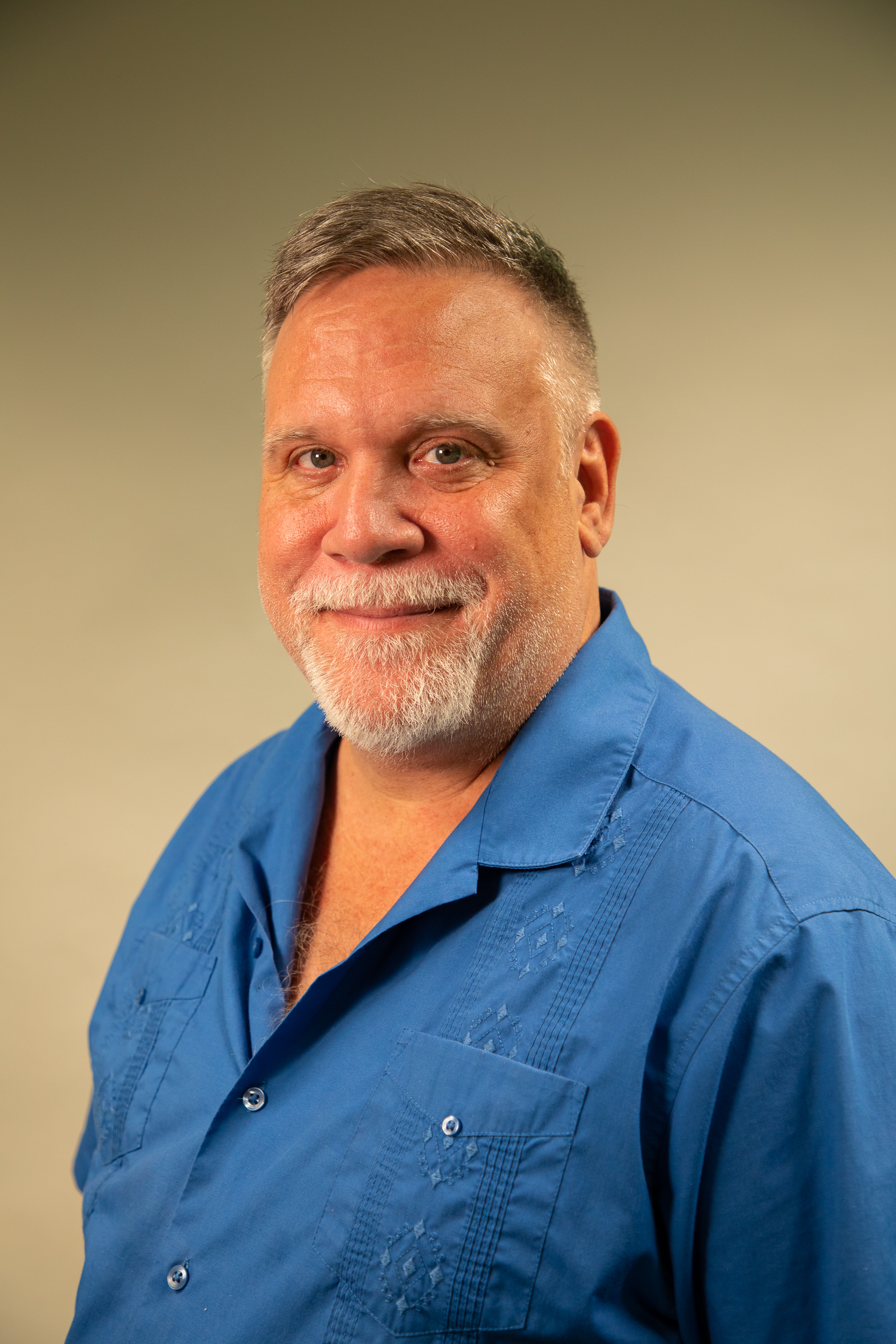
On Aug. 20, Huse, a University of South Florida librarian, left friends family also wondering why after he died by suicide at his home in Seminole Heights East. He was 52 years old and is survived by Carol Elwood, his stepdad, Howard Elwood, and his brother Tim Huse. In a note for family, Huse said he had depression. Elwood told CL he never indicated that he was suffering to her or anyone close to him.
Jeff Houck and Dr. Bárbara Cruz co-authored the infamous 2022 book “The Cuban Sandwich” with Huse. They grew close, like bandmates almost, as they traveled the Southeast supporting a work that bravely dispelled an age-old myth about Tampa’s favorite food. Cruz schooled Houck on the pronunciation of Miami’s Versailles restaurant and taught the crew pertinent Spanish curse words. The book was finished as the world holed away during COVID, intensifying their bond.
Huse, Cruz said, had the right balance of passion and analytical expertise, and that the book couldn’t have happened without him. The New York Times even immortalized Huse in a 2023 illustrated history of the Cuban. In its obituary of him, the Times called Huse “the perfect referee” for Tampa and Miami’s sandwich crisis.
A week after losing their friend, Cruz and Houck—a Cuban-born professor at USF and former Tampa Tribune editor, respectively—said Huse was still omnipresent in their lives.
“He wakes me up, usually around four in the morning, but it’s been good thoughts, good things,” Cruz told CL.
Houck, now vice president of marketing for Columbia Restaurant and its affiliated concepts, continually sees Huse’s name pop up in email searches. He had his first dream about Huse on Aug. 28 and called it an intense experience.
“The beautiful terribleness of it is that it has brought out an absolute torrent of love that people had for him,” Houck added.
All that love will manifest itself at Friday’s special edition of The Commodore’s “Salud and Happy Days,” a storytelling-improv series where Huse was the special guest in January 2024. Friends are invited to tell stories about Huse; some actors may improv certain scenes afterwards, but all of the money donated will be given to a charity of the family’s choosing. On Sunday, the family hosts a public memorial at Columbia’s El Siboney Room.

Salud and Happy Days: A Remembrance of Andy Huse
Time Fri., Sept. 12, 7:30 p.m. 2025
Location The Commodore, 811 E. 7th Avenue, Tampa
Gary Mormino, professor emeritus at USF, told CL that Huse started his ascent when he decided on getting his master’s in library science. But several of Mormino’s colleagues shot down Huse’s desire to pursue foodways in a historical context.
“Myself and Ray Arsenault were really the only two historians to guide Andy at that time,” Mormino said, heaping praise on a remarkable career that included the “From Saloons to Steak Houses” history of Tampa.
Around the time he completed a centennial hardcover book about the Columbia, Huse became the go-to guy in special collections and could navigate the stony, cold USF archive like no one else, Mormino added.
“Countless writers, scholars, and journalists, relied on Andy to find a document. They would call writing about hurricanes, asking, ‘What have you got?’” Mormino said. “Andy seemed to have his radar very well prepared to find anything there.”
Huse was a star for USF libraries, so friends were puzzled to learn that he was being more or less fired by his employer of 27 years. Termination records obtained by CL include a letter delivered on Aug. 12 to Huse by certified mail a week before his death. It said that his last day as a librarian at USF would be Aug. 13, 2026.
“…this notice of non-reappointment does not constitute a dismissal for cause or disciplinary action, but rather the exercise of the University’s prerogative to discontinue your appointment with proper notice given,” the letter signed by Todd Chavez, Dean at USF Libraries, says. A follow-up from HR says Huse was assigned to work off-campus for the duration of his employment and that he could not work in employee-only areas of the library. He was to contact security about getting any of his belongings.
“You are reminded that you are not authorized to speak on behalf of the University or the Library in matters of public interest,” the letter added.
Three redacted letters of reprimand from the last six years accuse Huse of using “hostile” tone in calls and voicemails, displaying conduct “unbefitting” of a faculty member.
A resignation email from Huse to Chavez and Tomaro Taylor, the Director of USF Libraries Special Collections, was transmitted at 5:37 a.m. EDT on Aug. 20.
Elwood told CL that Huse was the only one of her sons who preferred calling her over texting; they talked several times a week while he was taking a daily walk.
Huse’s last post on social media was a 1916 paper clipping extolling the benefits of walking. “He captioned the post, “Wishing safety and health for all in 2025,” Huse wrote.
“Things are changing at the library,” Elwood said about the non-renewal of Huse’s contract. “Andy perhaps didn’t fit in with the direction that the library was going.”

But outside the library, Huse was a sought after guest for talks and popular at the many civic functions he attended.
Huse was an ace in the kitchen, too, and cooked for his entire life. His “Arroz con Andy” was a take on chicken and yellow rice where beer, bacon, chicken and saffron come together in a one-of-a-kind way.
He certainly belonged with family. Huse and his brothers shunned their friends during the pandemic, Elwood told CL, choosing instead to live in a “bubble” with she and her husband. For months it was the four of them, and not one of them got COVID. They alternated cooking every Sunday when her sons would come over for “linner.” Huse’s stepdad loved his meatloaf loaded with pureed vegetables. It’s a tradition that didn’t stop when the pandemic faded away.
“After dinner, Andy would either read something that he found interesting to us, show us something he saw on YouTube, or share some of his own writings with us. We kept track of all the menus and only repeated any by request,” Elwood added.
Asked how the four-year-old would-be-journalist became Andy, Elwood told CL that all her kids were creative, which she encouraged.
“They all were ferocious readers, and read about all kinds of diverse things constantly,” she said. Every night, she read them a story, but when she was done, she would leave it with them and let them read it alone.
“That’s how they’d fall asleep. Every one of them to this day, have books sitting down the side of their bed, because they read every night before they’re going to bed,” she said.

In that way, it’s fitting that Huse’s last work is a completed, definitive, history on the Tampa Theatre, which will be published next year as part of centennial celebrations for the venue.
Mormino, Elwood, and other close friends got to proofread the work, and so did Jill Witecki who clerked at the Tampa Tribune in the late-’90s and early 2000s before moving to public relations.
A coffee table book was the initial idea, but there was a bigger and better story about Tampa Theatre’s place in the city over the last century. The book could not be a navel-gazing pat on the back.
“What we needed was an author that could really help us tell that story,” Witecki told CL. “He was on board from day one.”
Huse and Witecki’s team interviewed everyone they could think of, and saved pretty much everything, including records and artifacts from family members of famed architect John Eberson who designed the historic movie palace.
Huse not only authored the book, but shepherded it almost all the way through the publishing process. All he didn’t do was index the work.
After sharing the first draft last November, Huse dove back in, finding more stories and remained excited.
Witecki—now vice president, director of marketing and community relations for Tampa Theatre—said she knew that Tampa’s famed food-loving historian was familiar with the theater. The coolest part of the book process, however, was watching him fall in love.
“Watching him go from the casual passerby, the casual patron, to someone who was fully-engaged and fully-immersed. Watching him come to his first silent movie and the reaction he had to it, watching him then turn that passion outward,” Witecki said, was a gift.
She’s grateful that 100 years from now, when Tampa Theatre is celebrating its 200-year anniversary, and trying to understand what Tampa was like, Huse will be there.
“Hopefully there’ll be another Andy Huse 100 years from now, that’s writing about the second century of Tampa Theatre,” Witecki added.
There won’t be another Andy Huse, Witecki said, but there will be curious people always asking, “Why?”
Huse, she explained, continually asked that question, and it’s on the rest of us to encourage curious people to keep doing the same.
“We won’t have another Andy,” she repeated. “But we’ll have the next generation of Andys who want to keep telling that story.”
If you are having thoughts of suicide, call 211 or 988 to connect with the Crisis Center of Tampa Bay 24/7.
Pitch in to help make the Tampa Bay Journalism Project a success.
Subscribe to Creative Loafing newsletters.
Follow us: Google News | NewsBreak | Reddit | Instagram | Facebook | BlueSky
This article appears in Sept. 4-10, 2025.