

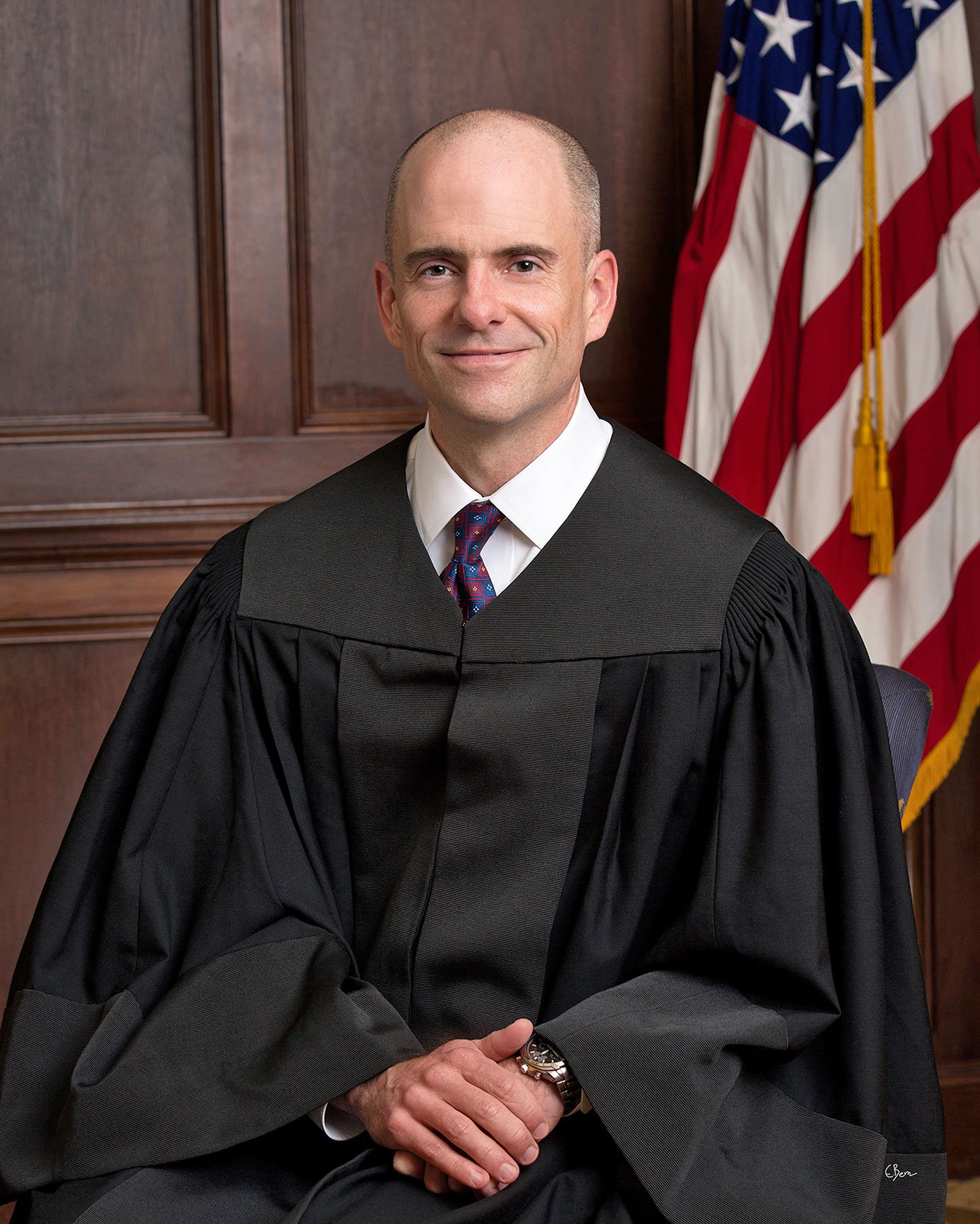
A panel of the 11th U.S. Circuit Court of Appeals, in a 2-1 decision, overturned a preliminary injunction that U.S. District Judge Mark Walker issued last year to block enforcement of the law against high-school teacher Katie Wood.
The majority opinion said Wood “cannot show, with respect to the expression at issue here, that she was speaking as a private citizen rather than a government employee” when she interacted with students in her classroom. As a result, it concluded that the state restrictions did not violate her speech rights.
“We hold only that when Wood identified herself to students in the classroom using the honorific ‘Ms.’ and the pronouns ‘she,’ ‘her,’ and ‘hers,’ she did so in her capacity as a government employee, and not as a private citizen,” said the opinion, written by Judge Kevin Newsom and joined by Judge Andrew Brasher.
But in a dissent, Judge Adalberto Jordan pointed to potentially far-reaching implications of the ruling. He wrote that the “majority’s expansive application of the government speech doctrine essentially leaves the First Amendment on the wrong side of the schoolhouse gate.”
“We should be wary of holding that everything that happens in a classroom constitutes government speech outside the ambit of the First Amendment,” Jordan wrote. “Those who wield the power of the government today and are on one side of the gender and culture wars will be the ones at risk of being compelled to speak against their beliefs, or silenced, when their opponents are in charge. Today’s opinion will then not look as attractive.”
The pronoun restrictions were part of a series of controversial measures that Gov. Ron DeSantis and Republican lawmakers have approved in recent years that focus on transgender people — and have drawn legal challenges. For example, they have passed a measure aimed at preventing minors from receiving puberty blockers and hormone therapy to treat gender dysphoria.
Violations of the pronouns law could result in teachers being stripped of certifications and financial penalties for school districts.
In granting the preliminary injunction last year, Walker said Wood used her preferred pronouns before the law went into effect and that the “threat of mandatory discipline” prevented her from using them.
“This is a classic speech injury — Ms. Wood spoke in the past and wants to speak in the future, but she is deterred by a credible threat of discipline. This court concludes that Ms. Wood has submitted sufficient evidence to establish an injury-in-fact,” he wrote.
Walker also wrote that the state “declares that it has the absolute authority to redefine your identity if you choose to teach in a public school. So, the question before this court is whether the First Amendment permits the state to dictate, without limitation, how public-school teachers refer to themselves when communicating to students. The answer is a thunderous ‘no.’”
But Wednesday’s majority opinion said a “teacher’s right to speak is not without limits,” as teachers are government employees paid, in part, to speak on the government’s behalf. It also said the decision doesn’t involve “whether Wood has a First Amendment right to use gendered identifiers or don a ‘she/her’ pin when conversing with colleagues in the faculty lounge, or, for that matter, even whether she has a right to do those things in her classroom after the students have departed for the day.”
“Given the statute’s relatively limited sweep and, even more so, the narrowness of Wood’s challenge, this is, we think, a straightforward case. When a public-school teacher addresses her students within the four walls of a classroom — whether orally or in writing — she is unquestionably acting ‘pursuant to (her) official duties.’ Interacting with students during class time, quite literally, is a teacher’s ‘official (duty),’” Newsom wrote, partially quoting from a U.S. Supreme Court precedent.
But Jordan wrote that the law “has nothing to do with curriculum and everything to do with Florida attempting to silence those with whom it disagrees on the matter of transgender identity and status.”
“If the majority opinion is right, and I do not think that it is, Florida can require that married female teachers use the last name of their husbands in the classroom even if they have chosen to keep their maiden names (because it declares as a matter of state policy that it does not like female teachers to appear to students to be independent of their husbands); it can demand that unmarried female teachers use ‘Mrs.’ instead of ‘Ms.’ in the classroom (because it declares as a matter of state policy that it wants students to think that their female teachers are all married or should aspire to be married); and it can require all teachers to call themselves ‘Teacher Smith’ in the classroom instead of using their actual last names (because it declares as a matter of state policy that any pedagogic individuality is bad),” Jordan wrote. “If these possibilities sound ‘First Amendment crazy,’ it is because they are.”
Subscribe to Creative Loafing newsletters.
Follow us: Google News | NewsBreak | Reddit | Instagram | Facebook | BlueSky
This article appears in Jul 3-9, 2025.